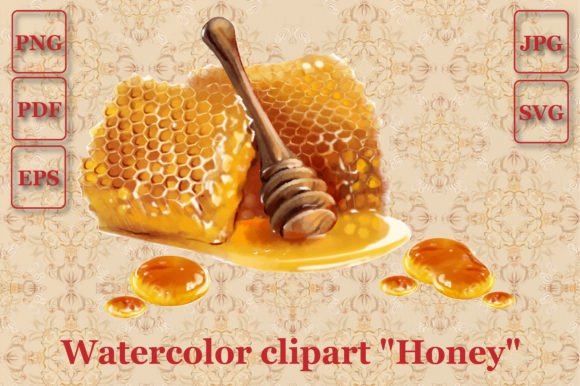
A Honey Spoon and Honeycomb Watercolor Graphic for Warm Branding
Let’s imagine a client is launching a new line of organic honey-infused skincare. Their marketing needs visuals that evoke natural purity, gentle craftsmanship, and a touch of warmth. Opening the Honey Spoon and Honeycomb Watercolor zipped file, my first impression is immediate: this is a soft, inviting, and versatile graphic design asset. The watercolor style isn't harsh or overly digital; it feels handmade, suggesting authenticity. This emotional tone is perfect for brands that want to communicate natural, wholesome, or artisanal values. It would feel off for a stark, tech-focused corporate brand, but for lifestyle content, handmade product promotions, or a cozy event campaign, it sets an ideal mood.
Where This Honey Illustration Elevates Real Marketing Projects
For our hypothetical skincare launch, this asset becomes a visual anchor. The honey theme directly supports the product story. In practice, the multiple file formats—especially the vector SVG—are a brand designer’s dream. Here’s how Honey Spoon and Honeycomb Watercolor performs across key marketing and branding situations:
- Brand Identity & Logo Design: The simplified honeycomb or spoon element could be extracted to create a secondary logo mark or a charming brand emblem for packaging.
- Packaging Design & Product Labels: The watercolor texture adds a premium, tactile feel to label backgrounds or accent borders, elevating a simple jar.
- Social Media Graphics: For Instagram posts or Pinterest pins promoting "behind-the-scenes" or ingredient stories, this illustration provides instant visual consistency and a stronger first impression.
- Digital Ads & Blog Graphics: Used as a header graphic for a blog post about natural ingredients, or as a subtle background in a Facebook ad, it builds audience trust through a cohesive, professional appearance.
- Website & Email Banners: As a hero graphic on a landing page or within an email campaign banner, it creates an emotional connection before the user even reads the text.
- Lead Magnets & Printable Designs: Incorporated into a downloadable recipe guide or a printable promotion flyer, it makes the content feel more valuable and thoughtfully designed.
- Merchandise & Digital Product Visuals: The SVG’s suitability for sublimation means it could translate to tote bags or mugs for brand merchandise, or serve as a cover graphic for a digital content kit.
Campaign Versatility: From Hero Graphics to Branded Templates
This honey-themed illustration works best as a supportive element, not the sole carrier of complex information. Its strengths lie in decorative enhancement and mood-setting. Think of it as a star player in these roles:
- Hero Graphics and Campaign Headers: It can dominate a visual space to immediately communicate the product’s natural theme.
- Branded Template Bases: Dropped into Canva templates as a fixed design layer, it allows social media managers to quickly generate consistent visuals.
- Packaging Accents and Content Bundles: Small, repeated uses across a product line or a series of blog posts build stronger brand recognition.
- Promotional Banners and Editorial Layouts: It breaks up text-heavy sections in media kits or digital ads, improving engagement through better visual hierarchy.
Practical Limitations and Designer Notes for Professional Use
While versatile, Honey Spoon and Honeycomb Watercolor should be applied with strategic care. Its watercolor details and soft lines have inherent limitations. Avoid using it in these contexts:
- Formal Corporate Branding: The handmade aesthetic clashes with minimalist, stark corporate identities.
- Dense Information Layouts: Placing it over complex data tables or text-heavy infographics will create a messy, competing visual field.
- Small Mobile Graphics: When scaled down extremely, the watercolor details may blur or lose clarity, harming readability.
- Overly Minimal Brands or Low-Contrast Backgrounds: If your brand colors are very pale, the illustration might fade and lose impact.
Before committing this asset to a live campaign, I run these practical checks:
- Test it against the brand’s primary color palette. Does it complement or clash?
- Check its performance in black and white for potential printed materials where color isn’t guaranteed.
- Place it inside real campaign mockups—a social post, a web header—and preview it on a mobile screen.
- Test readability when the graphic is used small, perhaps next to a logo.
- Compare it visually against key competitor assets. Does it help us stand out?
- Pair it with different font styles: a clean sans-serif for modern balance, a serif for classic touch, or a script font to enhance the handmade mood. Review spacing and balance.
- Most critically, confirm the commercial license covers our intended use in paid ads, client work, and permanent business branding.
Why This Design Asset Resonates with Creative Entrepreneurs
For small business owners, online coaches, and content creators, Honey Spoon and Honeycomb Watercolor isn’t just clipart; it’s a strategic tool. It helps build a visual story quickly. A blogger can use it to create a series of cohesive Pinterest graphics about homemade gifts. A digital seller can embed it into the visuals of a honey-themed digital planner. It supports clearer product presentation and more memorable campaign visuals without requiring deep design expertise, thanks to its ready-to-use formats. By providing a consistent, warm, and professional graphic element, this illustration from the creative marketplace allows entrepreneurs to focus on their message, while their branding looks intentionally crafted.
In summary, this honey spoon and honeycomb watercolor vector drawing is a robust, mood-setting design asset. Its value lies in its ability to convey a specific emotional tone—natural, gentle, artisan—across a wide range of marketing visuals. When applied thoughtfully, with attention to its strengths and the practical notes above, it becomes a powerful ally in building audience trust and visual consistency for brands that thrive on warmth and authenticity.